Everyone in beverage R&D wants the same thing: a 100% Clean Label formulation for their shelf-stable juice concentrates and bulk fruit purees, boasting a 12-month ambient shelf life, high dilution ratios, and fat margins. Consumers demand it, and brands promise it.
But if you talk to the factory owners and food scientists actually running the lines, you'll hear a different story. In commercial manufacturing, Absolute Cleanliness, High Yield, and Profitability form an "Impossible Triangle." You only get to pick two.
Replacing industrial additives with natural alternatives is not a 1:1 swap. It is the structural destruction of your cost-per-cup model and your flavor consistency.
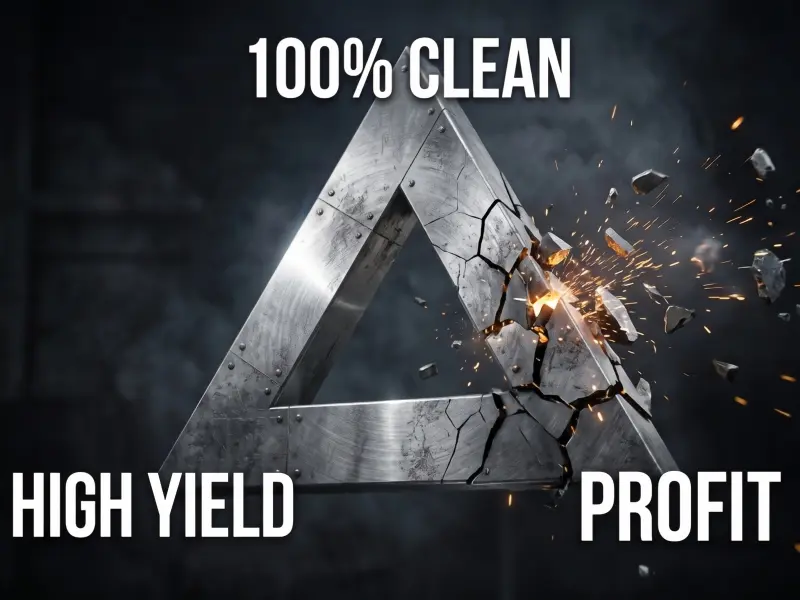
1. The Sweetener Illusion: The Volume and Cost Trap
Replacing High Fructose Corn Syrup (HFCS) with pure sucrose is only step one. The true enemies of a clean label are high-intensity artificial sweeteners (like Sucralose, Aspartame, and Acesulfame K).
Consumers and brands demand their removal due to ongoing clinical debates regarding their disruption of gut microbiota and metabolic signaling. But here is the commercial trap: you cannot simply "remove" them; you must replace their sweetness.
These synthetic sweeteners are the industry’s ultimate commercial cheat code because they provide explosive sweetness at zero physical volume and near-zero cost. If you strip them out to go 100% clean, you must compensate by dumping massive volumes of solid sucrose or pure fruit solids into the tank to achieve the same sweetness level, which causes a massive spike in actual Brix (soluble solids).
This massive volumetric shift doesn't just spike your raw material spot prices—it introduces crippling hidden processing costs (intensive melting, filtration, and massive energy consumption). Your baseline cost curve breaks before the product even hits the blending tank.
2. The Yield Collapse: The Barista's Nightmare
The myth of the "one drop per cup" dilution ratio relies entirely on those artificial sweeteners combined with commercial hydrocolloids (like CMC and xanthan gum).
When you remove these synthetic gums and artificial sweeteners, your viscosity and sweetness profiles collapse. To rebuild that mouthfeel and flavor, formulators must exponentially increase the actual fruit solid content. The commercial reality? Depending on the specific application and base type, an industry-standard 1:6 or 1:8 dilution ratio plummets to 1:3 or even 1:2.5.
This is an execution nightmare for the terminal market. A much lower yield means a barista uses drastically more base per cup. This instantly multiplies shipping weights, accelerates inventory depletion, and crushes the net margin per drink.
3. The Flavor and Preservation Gamble
It’s not just about removing chemical preservatives like sodium benzoate. What happens when you strip out synthetic acids, artificial colors, and synthetic flavors, replacing them all with 100% natural botanical extracts?
First, the Bill of Materials (BOM) skyrockets, because you must rely on ultra-premium, high-acid natural citrus derivatives to artificially pull the pH strictly under 4.0 for aseptic preservation. Second, you face a massive commercial question mark: Can you guarantee flavor stability? Natural ingredients are volatile. Without synthetic flavors and colors to mask seasonal crop variations, maintaining the exact same flavor and visual profile batch after batch becomes nearly impossible.
4. The Retail Meat Grinder: Who Pays the Bill?
Look at the unit economics. A retail fruit tea might show a 60-70% gross margin on paper. But based on typical Southeast Asian benchmarks, once you deduct rent, labor, waste, and 20%+ delivery commissions (Grab, Gojek, UberEats), net profit barely scrapes 20%.
If the supply chain forces a 100% clean-label base, driving the dilution ratio down to 1:2.5 and doubling the raw material costs, who pays that difference? The data shows consumers won't pay a 50% premium for their daily iced tea. If the retail price stays flat, the supply chain cannot absorb the cost. Someone bleeds.
5. The JuiceBrix Path: The Intelligent Compromise
Faced with the Impossible Triangle, JuiceBrix chose the pragmatic path of intelligent commercial transformation. We don’t actively push unscalable 100% clean-label fantasies as our default solution, because we refuse to bankrupt our clients' franchisees.
Instead, we navigate this triangle to find the ultimate commercial sweet spot. That is why our core lineup focuses on two optimal compromises:
First, our flagship SariBoost™ Compound Fruit Bases firmly strip out the most egregious industrial interventions—0% Added Colors, 0% Added Flavors, 0% Added Hydrocolloids—utilizing natural botanical bases to stabilize the matrix.
Second, our Pure Sugar Series completely eliminates high-fructose corn syrup (0% Added HFCS), delivering clean, uncompromising sweetness.
By engineering these specific compromises, we defend your commercially viable dilution ratio, secure a 12-month ambient shelf life (bypassing the cold chain entirely), and maintain a cost-per-cup that fiercely protects your net margin.
The Exception
We know the realities of commercial food science. But there are always exceptions. If your brand targets the top 1%—the demographic actually willing to pay the premium for a flawless ingredient list and a 1:2.5 dilution cost—we have the infrastructure.
As a leader in aseptic beverage contract manufacturing, backed by an 18,000-ton capacity and ISO 22000-certified facility, JuiceBrix has the formulation library and sourcing power to manufacture a strict 100% Clean Label product at scale. If your terminal market can stomach the true cost of absolute cleanliness, contact us. We will build it.
We don’t lack the technology. We were just waiting for a buyer who could afford the truth.
Why is 100% clean label considered an "impossible triangle"?
Because achieving absolute purity often requires replacing synthetic additives with massive volumes of natural solids. This destroys your dilution yield and drives up raw material and processing costs, making it nearly impossible to maintain high profitability.
What is the "volume trap" of artificial sweeteners?
High-intensity sweeteners add sweetness with near-zero physical volume. Removing them for a clean label requires dumping in bulk solid sucrose or fruit solids to hit the same sweetness level. This spikes the actual Brix and introduces crippling processing costs like melting and filtration.
How does JuiceBrix solve this commercial dilemma?
We offer an "Intelligent Compromise." Our SariBoost™ Compound Fruit Bases strip out added colors, flavors, and hydrocolloids while maintaining structural yield. Additionally, our Pure Sugar Series eliminates HFCS without destroying your cost-per-cup model.
- 01 · Earn More One-third the fresh fruit, a better drink, and a cost structure your competitors cannot quote against.
- 02 · Experience How physical mouthfeel and the three zeros unlock gated channels and a 20–30% price premium.
- 03 · Own the Category Define it first, with ingredients only your market has — and hold the position.
- 04 · Win the Long Game Scale on an 18,000-tonne allocation that does not move — and let the first three compound.